


Cosplay Takes Center Stage: How TARUMT Students Bring Anime to Life
- Mamak Media
- Oct 17, 2024
- 7 min read

Updated: Oct 23, 2024
Discover how Attire Day brings students together to celebrate anime and self-expression By Ng Zi Ying — October 17, 2024 @ 3.00 pm

Students from across TARUMT KL gather in full cosplay on Attire Day 4.0. – JAPANESE LANGUAGE SOCIETY TARUMT KL
HAVE you noticed how cosplay is becoming more common on campus? At TARUMT KL, the Japanese Language Society (JLS) has embraced this culture by introducing Attire Day, a unique event that encourages students to express themselves through cosplay.
Kai An (President), William (Vice President), and Sean (Former President) from JLS shared insights into the event and their personal experiences with cosplay.
As suggested by the name “Attire Day,” the event originally began with the idea of reviving old-school fashions like Y2K styles and Harry Potter costumes, allowing students to express themselves in creative ways.
Sean, the JLS president of that time and also secretary of the Student Representative Council (SRC), had a sudden spark of inspiration.
“Why not just do one time, make cosplay the theme and more JLS-centric as SRC had stopped organizing it?” Sean shared. Thus, the first cosplay-themed Attire Day took place in February 2023.
Unlike previous themes, organizing an event with “Cosplay” as the main theme wasn’t effortless, although “Cosplay” has gradually become more general and gained more acceptance from the general public.
Sean mentioned that the university expressed concerns about potential issues, including inappropriate behavior or harassment under the guise of cosplay. To address this, the JLS team established clear rules and guidelines, ensuring that students participated respectfully and safely.
For instance, revealing outfits or those with religious connotations are strictly prohibited, especially outfit that touches 3R Dynamics (Royal, Religion & Race).
After the first successful Attire Day, the JLS team earned the university’s trust, which became more supportive of the initiative.
“It brought a fresh and vibrant energy to our campus,” Sean reflected gladfully.
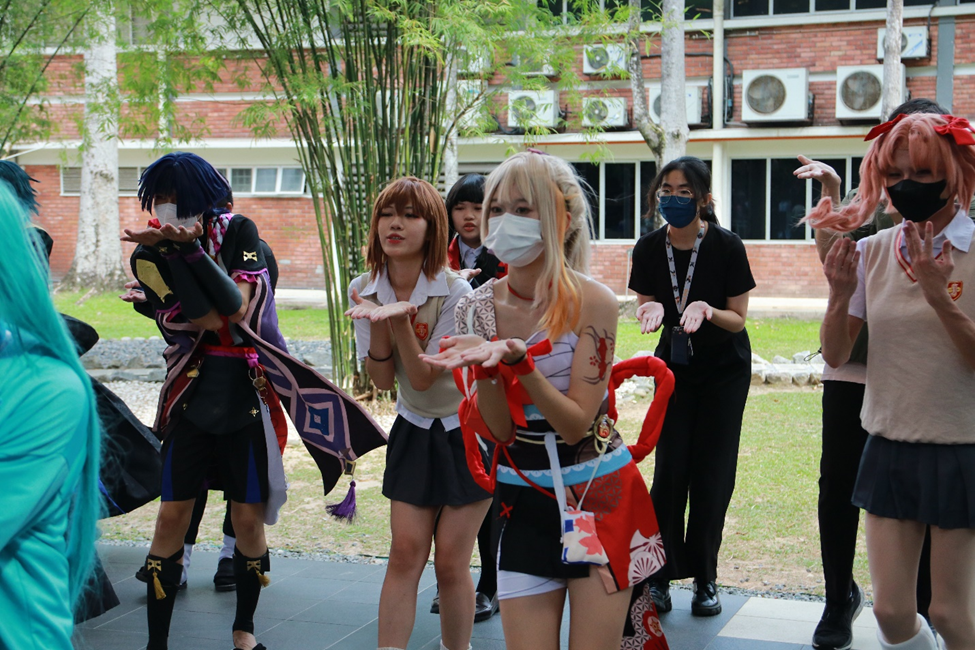
Cosplayers unite in dance during the odottemita session at Attire Day 4.0, showing off both their and moves. – APANESE LANGUAGE SOCIETY TARUMT KL
Attire Day welcomes all the TARUMT students, regardless of religion, background, or gender. From VTAR Institute to postgraduate students, everyone is invited to participate.
“We actually have lecturers cosplaying previously. I specifically, my professor that teaches me thermodynamics, enjoyed cosplaying for the whole day of Attire Day and additionally went into office as a cosplayer,” Sean stated.
Although Attire Day is smaller in scale than typical ACG (Anime, Comics, and Games) events, it has grown from its humble beginnings. Initially targeting otaku —people with consuming interests, particularly in anime, manga, video games, or computers.
As the event grows, JLS is tempted to attract general public with performances, singing performances, as well as culture games and booths. They decided to shift from a niche culture of people to a circle of people who love art.
Sean brought up that Attire Day 4.0 two months ago drew more than 200 of participants, compared to just 60 in its first Attire Day.

Guitar and vocal duo setting the stage! 🎸 Ready to rock the crowd. –JAPANESE LANGUAGE SOCIETY TARUMT KL
Cosplay Community
Cosplay is no longer limited to Gen Z and Millennials; this subculture has no age boundaries.
“I’ve seen kids as young as 7 or 8 years old, cosplay as Anya Forger from Spy x Family, and even people in their 60s cosplay as characters from films like Steven Chow’s Kung Fu Hustle,” William said.
“The golden age of anime primarily includes those currently between the ages of 16 to around 27 or 28,” Sean shared.
He went on to explain that children born roughly between 1998 and 2007 were exposed to iconic anime like Dragon Ball, Pokémon, Digimon, Bleach and Naruto. This era has deeply influenced individuals within this age group, fostering their enthusiasm and driving the cosplay culture we see today.
“Female cosplayer are used to be more than male, but I’ve seen an upward boom right now since a bunch of male characters came in,” William mentioned.
William gave an example based on Attire Day 2.0 to Attire Day 4.0. He said they are more male cosplayers coming in, closing the gender gap in the cosplay community. He believed that people becoming more open-minded, and cosmetics aren’t limited to a single gender anymore.
While in terms of races, most of the cosplayers are usually Chinese, but there has also been a noticeable increase in participation from diverse ethnic backgrounds, including Malay and Indian cosplayers.
“Cosplay isn’t just for people with a light-skinned characters, it’s for everyone,” Sean emphasized.
He highlighted the growing trend of hijabi cosplay, where Muslim women incorporate their hijabs into their characters’ costumes.
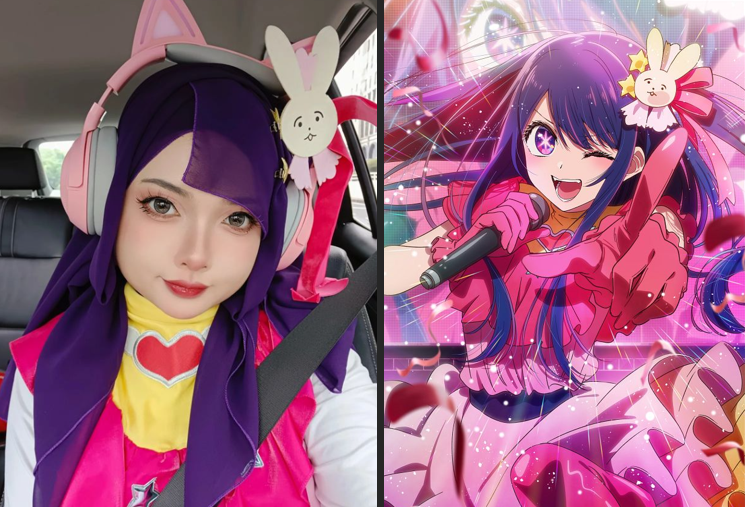
Miisa MHC, a Malaysian hijab cosplayer cosplay as Hoshino Ai from anime, Oshi no Ko. – PICTURE COURTESY OF @miisa_mhc FROM INSTAGRAM
Passion Behind the Costumes
Sean began cosplaying in 2016, portraying Shikamaru from Naruto.
Not trying to be a stuck-up person, but he portrayed himself as being someone who is always being strategic as well as smart and tactical. He started up with Shikamaru, because he is one of his spiritual characters.
“I feel a sense of resonance between the characters’ energy as well as their aura and behaviors.” he shared.
Kai An, who started cosplaying more recently, was drawn to the culture after attending ACG events.
“Everyone can dress up like other characters from the virtual world. They were so charming and beautiful. I wanted to be part of that world,” he said.
Memorable Moments in Cosplay
“Cosplaying itself is a topic to strike up a conversation with strangers,” Sean noted.
ACG events gather like-minded people, creating opportunities for cosplayers, who are normally introverts, to reach out and form friendships.
Kai An mentioned that cosplaying made it easier for him to connect with others and form new friendships.
“People I didn’t know would casually approach me and stike up a conversation. Over time, we became friends!” he added.
Cosplay Lingo Explained
1. OOC (Out of Character)
OOC refers to moments when cosplayer doesn’t follow the original character’s design and personalities according to the author. This term is especially common in “OOC Apologies,” especially in Chinese, “OOC致歉,” when cosplayers acknowledge deviations from their character.
“OOC exists because cosplayers keep it at such a very high level of regard in respect to the author for the character,” said Sean. Sean explained that cosplayers sometimes take the OOC issue to another serious level, and this kind of altercation of costume actually does bring up certain topics and dramas that actually did happen previously, which scared cosplayers.
“Some of them take cosplay really seriously, but some of us just take it as a hobby and just chill and stuff. But everyone has their own opinion of it. It’s very, very subjective,” Sean remarked.
Kai An then said that sometimes unexpected deviations are contrasted with extraordinary, like new faces of the character for the fans to discover. OOC is still acceptable most of the time, unless they did something over the boundary.
They all agreed that determined cosplayers should not force high expectations or standards onto people just taking cosplay as a hobby.
“It just makes the entire thing not fun anymore,” added Sean.

猫腻 𝐍𝐞𝐤𝐨𝐧𝐢, a Malaysian cosplayer cosplay as Ran-Mao from Kuroshitsuji (Black Butler) and Kenma Kozume from Haikyuu!! . – PICTURE COURTESY OF @nekoni26 FROM INSTAGRAM
2. Crossdressing/Crossplaying
Crossdressing or crossplaying refers to cosplayers dressing as characters of a different gender.
“This is a very tight rope we are walking on, a very gray area. We know that Malaysia itself is a Muslim-predominant country, where LGBTQIA topics are sensitive. (To be specific) it is actually a no-no in our country itself by law,” Sean explained.
He noted that many do it for fun or as part of the cosplay experience. For some, it can also provide a safe space to explore their identity when they struggle to fit into traditional gender roles. own real identity out while they really can’t fit into the opposite gender social stature.
William emphasized that the importance of personal freedom in cosplay, adding that crossdressing from female to male tends to be more accepted because the unisex nature of certain outfits. They clarified that crossdressing doesn’t equate to “cross-gendering”, and this distinction should be made clear.
“There was a recent incident in Taiwan where a male cosplayer, while dresses as a female character, entered women’s restrooms, claiming to be ‘in character.’ This kind of behavior crosses boundaries of both ethics and manners,” William stressed.
3. 無料 (MuRyou)
A Japanese term meaning “free,” MuRyou refers to the tradition of exchanging small trinkets or handmade gists at ACG events. However, the tradition of exchanging MuRyou itself isn’t really strong in Malaysia.
Sean shared that when he was cosplaying as Ayato from Genshin, he had prepared stickers for other cosplayers.
However, people have started to fear of MuRyou, especially homemade sweets and snacks.
“There were cases of people actually putting in needles to people,” said Sean.
“My friend also had received needles in cookies from the community, and she was shocked,” Kai An added on.
Therefore, it’s important to be cautios and check before you consume anything, since it’s a very hard thing to control.
Tips for First-Time Cosplayers
“Spend within your limits. Most importantly, do not borrow money for cosplay,” Sean warned.
Sean advised newcomers that the purpose of cosplaying and attending ACG events is to have fun, so just spend within your means.
In addition, do not be shy to ask questions because there have been a lot of unwritten rules in the cosplay community. Therefore, it’s best to find someone who is more experienced for guidance.
“Unfortunately, the cosplay community is a bit toxic,” agreed by them.
However, Kai An also encouraged beginners not to hesitate in asking questions, “If you are willing to speak up, there will be someone who is willing to guide you as well.”
Cosplay is more than just costumes—it's a vibrant community where passion, creativity, and personal expression thrive. While the journey into cosplay can come with its challenges, especially for newcomers, the sense of belonging and the connections made along the way make it a rewarding experience. As Attire Day continues to grow at TARUMT KL, it serves as a reminder that cosplay is for everyone, no matter their background or experience level. Whether you’re a seasoned cosplayer or just starting, the key is to have fun, express yourself, and embrace the community.


Comments